- Home
- Cruiser Yachts under 30'
- Westerly Cirrus
The Westerly Cirrus 22 Sailboat
Specs, Performance Analysis & Cruising Characteristics
Key Takeaways: The Westerly Cirrus 22 is a late‑1960s, masthead‑sloop, fin‑keel cruiser of about 21'9" (6.6 m) overall, built in solid GRP with a cast‑iron keel and transom‑hung rudder. It is not a modern volume boat; space is modest, tankage is limited and systems are simple. In return you get a relatively stiff, reassuring little yacht with a proper ballast ratio, decent tracking and a cockpit that feels safe for coastal passages. It suits sailors who value sailing feel, simplicity and low ownership costs over standing headroom and big‑boat comforts. The main trade‑offs are age‑related maintenance, tight interior volume and the need to be realistic about its bluewater ambitions.
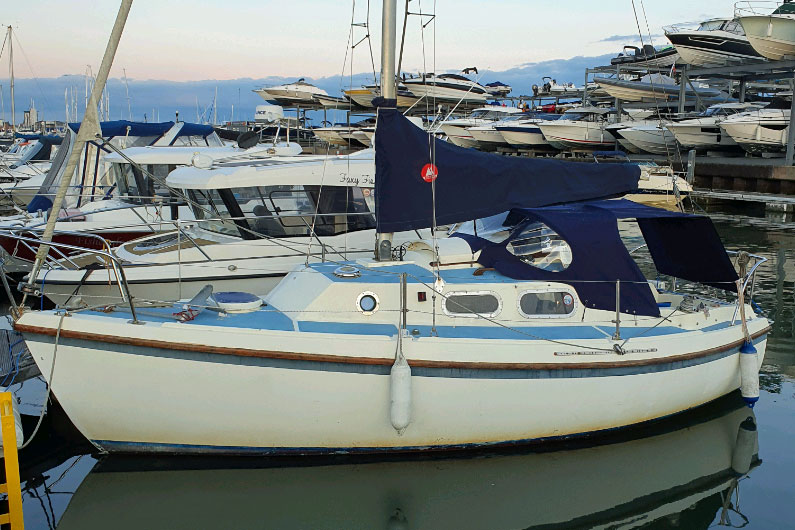 Westerly Cirrus
Table of Contents
- The Westerly Cirrus at a Glance
- Design & Construction
- Published Specification: The Westerly Cirrus Blueprint
- Sail Areas & Rig Dimensions
- Performance Analysis: Understanding the Design Ratios
- How the Westerly Cirrus Sails
- Bluewater Capability: Strengths & Trade-Offs
- Configuration, Layout & Cruising Characteristics
- Who This Boat Is Best For
- The Buyer’s Checklist: Common Problem Areas
- Summing Up
- Frequently Asked Questions (FAQs)
The Westerly Cirrus at a Glance
| Type: | Compact fin‑keel cruiser |
| Designer: | Laurent Giles & Partners |
| Builder: | Westerly Marine Construction (UK) |
| Production years: | Late 1960s to early 1970s (c. 1968–1972) |
| Rig: | Masthead sloop |
| Best for: | Coastal cruising, club racing, first ownership on a budget |
| Strengths: | Stiff for size, honest sailing manners, simple systems, low running costs |
| Trade‑offs: | Cramped interior, limited tankage, age‑related refit needs, not a true ocean passagemaker |
Design & Construction
The Cirrus 22 comes from the Laurent Giles school of conservative, seaworthy small yachts. The hull is a moderate‑displacement fin‑keel shape with a fairly full bow by modern standards, a transom‑hung rudder and a sensible sheer. It is not a flyer, but it is not a slug either; the numbers sit in that middle ground where comfort and control matter as much as outright speed.
Hull, deck and structure
The hull is solid GRP, typical of Westerly’s late‑1960s production: relatively heavy laminates, polyester resin and no structural core in the underwater sections. The deck is moulded GRP, usually with plywood or similar core in way of flat panels to stiffen the structure. The hull‑deck joint is an inward‑turning flange, bonded and through‑bolted, usually hidden under an aluminium toe rail.
The keel is a cast‑iron fin, bolted through substantial floors. On a boat of this age, keel bolts deserve careful inspection for corrosion and any signs of movement or weeping at the keel‑hull joint. The rudder is transom‑hung on pintles and gudgeons, simple and robust, but the stock and fittings should be checked for wear and play.
Windows, chainplates and fittings
The cabin windows on the Cirrus are typically framed acrylic units mechanically fastened through the cabin sides rather than modern bonded panes. That is good news structurally, but it does mean that perished seals and old bedding compounds are a common source of leaks. Expect to re‑bed or replace windows if it has not already been done.
Chainplates are stainless flat bar attached to internal structure, usually bolted to bulkheads or substantial knees rather than being fully encapsulated in laminate. The key checks here are for leaks at the deck penetrations, crevice corrosion around fasteners and any signs of bulkhead rot where water has been tracking down over the years.
Variants and layouts
The Cirrus 22 was built primarily as a fin‑keel, masthead‑sloop cruiser. Unlike some other Westerly models of the era, there is no widely documented bilge‑keel or centreboard version. A few boats were supplied with small inboard petrol engines (often Stuart Turner units), but many have either been converted to outboard propulsion in a transom well or repowered with a small diesel.
The interior is a straightforward small‑yacht layout: vee‑berth forward, heads area, then saloon with two settee berths and a compact galley. Some boats squeeze in a quarter berth, but space is tight. There are no major “Mk I / Mk II” structural changes that radically alter the buying advice; condition and refit history matter far more than minor trim differences.
Stability index
The Cirrus 22 predates the modern RCD and STIX system, and there is no widely published STIX figure for the design. Any assessment of offshore suitability therefore has to rely on traditional ratios, hull form and real‑world experience rather than a formal category label.
Published Specification: The Westerly Cirrus Blueprint
| Westerly Cirrus 22 Specifications | |
|---|---|
| LOA: | 21'9" (6.63 m) |
| LWL: | 18'0" (5.49 m) |
| Beam: | 8'0" (2.44 m) |
| Draft (fin keel): | c. 3'9" (1.14 m) |
| Displacement: | 3,696 lb (1,677 kg) |
| Ballast: | 1,680 lb (762 kg) |
| Rig type: | Masthead sloop |
| Hull material: | Solid GRP |
| Production dates: | c. 1968–1972 |
Sail Areas & Rig Dimensions
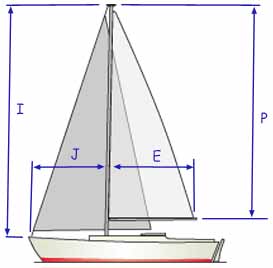 Rig dimensions
Typical published rig dimensions for the Westerly Cirrus 22 are:
- I: 26.0' (7.92 m)
- J: 8.3' (2.53 m)
- P: 23.0' (7.01 m)
- E: 9.0' (2.74 m)
From these, the usual working sail areas are:
- Mainsail area: P × E ÷ 2 ≈ 103.5 ftsuperscript2 (9.6 msuperscript2)
- Foretriangle (100% foretriangle): I × J ÷ 2 ≈ 108 ftsuperscript2 (10.0 msuperscript2)
- Total working sail area: ≈ 211 ftsuperscript2 (19.6 msuperscript2)
Many owners now use slightly overlapping genoas to help in lighter airs, but the basic numbers above are a good baseline for performance calculations.
Performance Analysis: Understanding the Design Ratios
Using the typical published figures (displacement 3,696 lb, LWL 18'0", beam 8'0", ballast 1,680 lb, sail area 211 ftsuperscript2), the main ratios come out roughly as follows:
| Ratio | Value | What it implies |
|---|---|---|
| Sail area / displacement (SA/D): | ≈ 14 | Moderate power; not under‑canvassed, but no rocket ship. Reasonable light‑air ability with a decent headsail. |
| Displacement / length (D/L): | ≈ 280 | On the heavier side for a 22‑footer, favouring steadiness and carrying power over sprightly acceleration. |
| Ballast / displacement (B/D): | ≈ 45% | Reassuring for a small boat; good stiffness and resistance to heel when pressed. |
| Capsize screening formula (CSF): | ≈ 2.1 | Borderline between “offshore‑friendly” and “coastal” by traditional rules; sensible for a small, beamyish cruiser. |
| Brewer motion comfort ratio: | ≈ 19 | Low‑to‑moderate comfort; motion will be lively in a seaway, as expected for a 22‑footer. |
Taken together, these numbers paint a consistent picture: the Cirrus 22 is a relatively heavy, well‑ballasted small yacht with modest sail power. It is not a featherweight flyer, but it has enough canvas to keep moving and enough ballast to feel planted when the breeze comes up.
For more on this topic, you might want to take a look at Understanding Boat Performance & Design Ratios...
How the Westerly Cirrus Sails
Upwind, the Cirrus 22 rewards a sensible sail plan and a bit of patience. With a decent headsail and a clean bottom it will tack through a reasonable angle and make steady progress, but it is not a high‑aspect, deep‑fin modern design. Expect a slightly fuller entry and a more forgiving groove rather than razor‑sharp pointing. The helm is generally light to moderate, with a gentle increase in weather helm as heel builds.
Downwind, the boat tracks well for its size. The fin keel and transom‑hung rudder combination gives predictable behaviour, and the relatively high ballast ratio helps keep the boat on its feet when pressed under spinnaker or a big genoa. In a quartering sea you will still feel the boat being pushed around—it is only 22 feet long—but it is not a skittish design.
Reefing is straightforward. With the modest SA/D, many owners carry full sail into the low teens of wind speed, then put the first reef in the main as the breeze climbs into the mid‑teens, backing up with a smaller headsail or a roll on the furling gear. The boat responds well to being kept fairly upright; over‑canvassing simply increases leeway and helm load without adding much speed.
Short‑handed, the Cirrus 22 is easy to manage. Loads are low, the cockpit is compact and everything is within reach. A tiller pilot transforms it into a very manageable single‑hander for coastal passages. The motion is lively but not vicious; you will feel the sea state, but the boat does not have the twitchy, flat‑bottomed slam of some lighter modern designs.
Bluewater Capability: Strengths & Trade-Offs
This is where expectations need to be realistic. The Cirrus 22 has some genuinely positive traits for offshore work: a decent ballast ratio, a solid GRP hull, a simple fin‑keel and rudder arrangement, and a cockpit that is not excessively open. Plenty of owners have taken similar small Westerlys across the Channel, around the UK and on Biscay crossings in the right weather windows.
However, there are clear limitations:
- Length and motion: At 21'9" (6.63 m), the boat will always have a short, lively motion in a big sea. Fatigue becomes a real factor on longer passages.
- Tankage: Original water and fuel capacities are minimal. Any serious cruising requires jerrycans and careful management.
- Stowage and payload: There is only so much gear you can sensibly carry before performance and trim suffer.
- Deck safety: Side decks are narrow by modern standards, and original guardrails and stanchions may be tired. Upgrading jackstays, non‑slip and handholds is wise.
In short, the Cirrus 22 is a robust coastal cruiser that can make occasional offshore hops in the hands of an experienced skipper who respects the forecast and the boat’s size. Treating it as a small ocean passagemaker would be pushing the design beyond its comfort zone.
Configuration, Layout & Cruising Characteristics
On deck, the cockpit is deep enough to feel secure without being a bath. Coamings give decent back support, and the tiller falls naturally to hand. Primary winches are within easy reach, and the mainsheet is usually on the aft end of the cockpit or a small traveller. Side decks are adequate but not generous; moving forward in a seaway calls for harness and handholds.
Below, you are reminded that this is a 22‑footer from the 1960s. Headroom is limited, and everything is on a compact scale. The typical layout runs:
- Vee‑berth forward, often with an infill to make a double
- Heads compartment or portable toilet area just aft of the vee‑berth
- Two saloon settee berths, sometimes with a small table
- Compact galley with single burner and sink, usually to one side of the companionway
Storage is in lockers under berths and behind backrests. For a weekend or a short cruise for two, it works. For longer trips, you need to be disciplined about what comes aboard. Liveaboard use is possible in the minimalist sense, but it is not comfortable in the way a 28–30 footer can be.
Ventilation is basic: forehatch, companionway and opening ports if fitted. Many owners retrofit additional vents or a solar fan to keep the interior dry.
Who This Boat Is Best For
Good fit for:
- Sailors wanting a first “proper” yacht with ballast keel and seagoing feel on a modest budget
- Experienced dinghy or dayboat sailors stepping up to a small cruiser that still sails like a boat, not a caravan
- Coastal cruisers who value simple systems, easy maintenance and low running costs
- Club racers in mixed fleets who enjoy tweaking sails and sailing the boat properly rather than relying on waterline length
Less ideal for:
- Anyone expecting standing headroom, a separate aft cabin or big‑boat interior comforts
- Long‑term liveaboards who need generous storage, tankage and systems
- Skippers planning regular ocean passages or high‑latitude work
- Owners who do not enjoy maintenance; at this age, a Cirrus 22 will always have a to‑do list
The Buyer’s Checklist: Common Problem Areas
If you are inspecting a Westerly Cirrus 22 with a view to purchase, pay particular attention to:
- Osmosis: Many older GRP hulls show some level of blistering. A few small blisters are not necessarily a deal‑breaker, but widespread or severe osmosis affects value and may require a peel and epoxy treatment.
- Keel bolts and keel‑hull joint: Look for rust staining, weeping, cracking or movement at the keel joint. Inside, inspect the bolts and surrounding laminate for corrosion and crushing.
- Deck core and fittings: Check around chainplates, stanchion bases, cleats and the mast step for signs of moisture, soft spots or stress cracking.
- Windows and leaks: Water staining on headlinings and bulkheads is common. Budget for re‑bedding or replacing windows and deck fittings if this has not been done recently.
- Chainplates and bulkheads: Inspect for corrosion, elongation of bolt holes and any rot or delamination in the timber structure they are attached to.
- Rig and standing rigging: On a boat of this age, assume that any rigging older than ten years is due for replacement. Check mast step, spreader roots and tangs carefully.
- Engine installation: Original petrol inboards are now more of a liability than an asset. A well‑installed modern diesel or a clean, practical outboard arrangement is preferable. Check fuel tanks, lines and ventilation.
- Electrics: Many Cirrus 22s have accreted wiring over decades. A tidy, fused, labelled system is a big plus; a bird’s nest behind the switch panel is a warning sign.
- Interior structure: Look for cracked tabbing, loose furniture, and any signs that structural bulkheads have been cut or modified.
Typical refit items on a newly acquired Cirrus 22 might include standing rigging, sails, seacocks, windows, some electrics and safety gear. In the UK, it is easy to spend as much again as the purchase price if you decide to “do it properly”, so the best value is usually in a boat where a previous owner has already tackled the big jobs.
Could this be your ideal cruising boat?
It may well be, but before going any further, it might be worth taking a look at my eBook 'How to Avoid Buying the Wrong Sailboat'...
Summing Up
The Westerly Cirrus 22 is not a modern performance cruiser and it is not a floating cottage. It is a small, honest, late‑1960s British fin‑keeler with enough ballast to feel secure, enough sail to be engaging and enough space to cruise two people in relative comfort for a few days at a time. The design ratios back up what owners report on the water: moderate sail power, solid displacement for the length and a motion that is lively but not vicious.
As a buyer, the key is to treat it as a 50‑plus‑year‑old yacht. The hull and basic structure are usually sound, but windows, deck fittings, rigging, electrics and engines all age out. A tired, cheap example can be a rewarding project if you enjoy refitting; a well‑sorted boat with recent rigging, dry decks and a sensible engine is worth paying more for.
If your sailing plans are coastal, your crew is small and you like the idea of a boat that sails properly without demanding huge budgets, the Cirrus 22 still makes sense. If you want standing headroom, big‑tank cruising or serious ocean ambitions, you will be happier looking a size or two up the Westerly range.
This article was written by Dick McClary, RYA Yachtmaster and author of the RYA publications 'Offshore Sailing' and 'Fishing Afloat', member of The Yachting Journalists Association (YJA), and erstwhile member of the Ocean Cruising Club (OCC).
Frequently Asked Questions (FAQs)
1. Can a Westerly Cirrus 22 cross the Channel or Biscay?
1. Can a Westerly Cirrus 22 cross the Channel or Biscay?
Yes, in the right hands and with a well‑prepared boat, Channel crossings are entirely realistic, and some owners have taken similar small Westerlys across Biscay. The limiting factors are size, motion and tankage. Good weather routing, conservative loading and upgraded safety gear are essential.
2. Is the Cirrus 22 suitable for a beginner?
2. Is the Cirrus 22 suitable for a beginner?
As a first “proper” yacht for someone with basic sailing skills, it can be an excellent choice. The boat is forgiving, loads are low and systems are simple. Total novices would be better learning with an experienced skipper aboard at first, but the design itself does not have nasty habits.
3. How does the Cirrus 22 compare to a Westerly Pageant or Centaur?
3. How does the Cirrus 22 compare to a Westerly Pageant or Centaur?
The Cirrus 22 is smaller, lighter and more performance‑oriented than the bilge‑keel Pageant and Centaur. Those boats offer more interior volume, twin keels for drying moorings and a more obvious cruising bias. The Cirrus feels more like a “sailor’s boat” but cannot match the bigger Westerlys for space and load‑carrying.
4. What are typical refit priorities on a newly bought Cirrus 22?
4. What are typical refit priorities on a newly bought Cirrus 22?
Most new owners focus on standing rigging, sails, seacocks, windows, electrics and safety gear. If the boat still has an elderly petrol inboard, replacing it with a modern diesel or a well‑thought‑out outboard installation is often high on the list. Non‑slip, guardrails and jackstays are also common upgrades.
5. What sort of performance can I expect under sail?
5. What sort of performance can I expect under sail?
In moderate conditions with a clean bottom and decent sails, you can expect hull speed of around 5–5.5 knots and respectable progress to windward. It will not keep up with modern light‑displacement sportboats, but in a mixed club fleet sailed well it can be competitive on handicap, especially in a breeze where its ballast and stiffness come into play.
6. Is it realistic to live aboard a Cirrus 22?
6. Is it realistic to live aboard a Cirrus 22?
For short periods and minimalist sailors, yes. For most people, full‑time liveaboard life on a 22‑footer is cramped and demanding. Storage, tankage and headroom are the main constraints. As a stepping stone into cruising life, it is better seen as a capable weekender and short‑cruise boat.
Recent Articles


-
Westerly Cirrus – Specs, Performance & Buyer’s Guide for the Cirrus 22
May 14, 26 03:32 PM
An in‑depth Westerly Cirrus 22 review covering specs, design ratios, sailing performance, bluewater limits, common issues and buyer’s checklist for this classic 22‑foot Westerly cruiser. -
Shearwater 45 Sailboat Review – Specs, Ratios & Bluewater Capability
May 14, 26 04:28 AM
A practical, owner‑focused review of the Shearwater 45 sailboat covering specs, design ratios, bluewater suitability, layouts, common issues and buyer tips for serious cruisers. -
Jeanneau Sun Odyssey 519 Review – Specs, Ratios & Cruising Insight
May 11, 26 03:32 AM
In‑depth Jeanneau Sun Odyssey 519 review covering specs, design ratios, sailing performance, bluewater capability, layouts and buyer checklists for serious cruisers researching this modern 50‑footer.

Specs, Performance Analysis & Cruising Characteristics of Popular Cruising Boats...
A few of our Most Popular Pages...



Copyright © 2026 Dick McClary Sailboat-Cruising.com